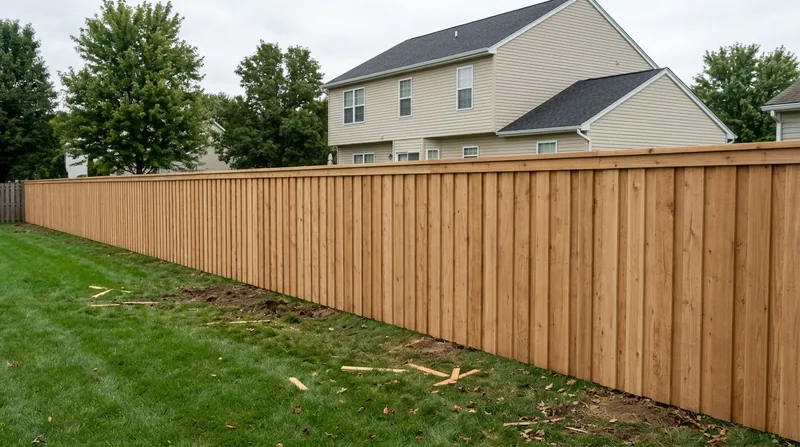




Toledo's flat lake-plain terrain and harsh freeze-thaw winters put real pressure on wood fences. A privacy fence installation in Toledo means posts set deep in concrete, cedar or pressure-treated pickets chosen for their durability, and the kind of honest guidance that tells you when a 6-foot board-on-board fence is worth the money and when treated pine delivers the same years of service at half the cost. We build fences that stand through wet springs, heavy snow, and the wind off Lake Erie that pushes weaker panels over. Whether you're protecting a deep backyard lot in the Old West End, anchoring a modern subdivision home in Sylvania or Perrysburg, or screening a narrow city property in East Toledo, the job starts with the right materials and the right installation depth. Cedar looks beautiful and ages to a soft grey, but it costs more. Pressure-treated pine is the practical choice for most homeowners, and it performs just as well when the posts are set right.
Why Wood Privacy Fences Matter in Toledo: Lake-Plain Winters and Wet Clay
Toledo sits on soft, poorly drained lake-bed clay that stays saturated through late spring and early winter. That moisture at the ground line is the single biggest enemy of a wood fence post. Posts set shallow or in loose soil heave up in hard freezes, leaving gaps and tilted panels. Posts set deep in concrete and anchored properly stay true even when the ground around them shifts. A 6-foot privacy fence is the standard in Toledo neighborhoods, and it works because it balances privacy with the local building codes and HOA rules that govern height and setback. The wood itself, whether cedar or pressure-treated pine, resists rot when it's kept off direct soil contact and when water drains away from the base.
- Posts must be set at least 30 to 36 inches deep in concrete to survive freeze-thaw heave and keep panels plumb through winter.
- Cedar pickets age beautifully and resist decay naturally, but cost 30 to 40 percent more than pressure-treated pine.
- Pressure-treated pine lasts 15 to 20 years in Ohio's climate when posts are concrete-set and water is allowed to drain.
- Board-on-board construction overlaps pickets to block sight lines and sheds water better than side-by-side boards.
- Post spacing of 4 to 6 feet keeps panels from sagging under snow load or wind pressure.
Getting these details right from the start is what separates a fence that looks solid for two decades from one that starts tilting and rotting after five years.
Key info: Toledo's winter frost line sits 48 to 52 inches below grade. Posts must go deep. A contractor who sets posts at 24 inches is setting you up for heave and failure. Concrete footings, not tamped soil, are the only reliable anchor in this clay.
For more on protecting your investment, see our guide to fence repair in Toledo, where we cover common problems and when repair makes sense versus replacement.
How We Install Wood Privacy Fences: The Toledo Method
The installation process starts with a site walk, property line confirmation, and a clear conversation about whether cedar or pressure-treated pine fits your budget and timeline. We call 811 for a utility locate before we dig anything. Posts are marked, holes are dug to frost depth, and posts are set in concrete mixed to the right strength and slump. Pickets are then fastened board-on-board or side-by-side, depending on your preference and privacy needs. Caps and trim are added to shed water and finish the look. The whole job, from first hole to final nail, is built to last through Toledo winters without leaning, warping, or rotting at the base.
- We confirm your property line and any HOA or local height and setback rules before breaking ground.
- We call 811 for a free utility locate to avoid gas, electric, or water lines in the post holes.
- We dig post holes to frost depth (48 to 52 inches in Toledo) and set posts in concrete for permanent stability.
- We install pickets board-on-board or side-by-side, with proper spacing to allow water drainage and wood movement.
- We add caps and trim to protect the top of posts and direct water away from the wood.
- We stain or seal new cedar if you want it, or leave it to weather naturally to a soft grey.
This approach takes longer than a quick nailed-on installation, but it's the only way to build a fence that stays straight and doesn't rot.
Local example: A 120-foot privacy fence in Perrysburg on a standard residential lot with clear access and no trees takes 3 to 4 days from start to finish. A narrower lot in the Old West End with mature maples and limited equipment access can take 5 to 7 days because we work carefully around root systems and existing structures. We never rush.
For a step-by-step look at how we handle more complex repairs and replacements, visit our fence post repair and replacement page.
Installation Approaches: Cedar vs. Pressure-Treated Pine
| Material | Description | Best For |
|---|---|---|
| Cedar Pickets | Naturally rot-resistant wood with warm reddish tone that ages to soft grey. Lighter weight, easier to work. More expensive upfront. | Homeowners who value appearance and natural durability, and can invest 30 to 40 percent more per linear foot. |
| Pressure-Treated Pine | Chemically treated to resist rot and insects. Denser than cedar, heavier to install. More affordable. Weathers to grey-brown over time. | Budget-conscious homeowners seeking reliable 15 to 20 year performance without annual maintenance or staining. |
| Board-on-Board | Pickets overlap on both sides of the stringers, creating a solid privacy screen. Sheds water better. Slightly more material and labor. | Properties requiring maximum privacy and maximum weather protection, especially in exposed or windy locations. |
| Side-by-Side | Pickets run flush against stringers on one side, creating a cleaner look from one direction. Uses less material and labor than board-on-board. | Residential lots where privacy is important but material cost matters, or where the fence is viewed primarily from one side. |
Wood & Privacy Fence Installation Cost in Toledo: What to Expect
A typical wood privacy fence installation in Toledo starts at around $27 per linear foot for pressure-treated pine, side-by-side construction with posts set in concrete. Cedar board-on-board can run $35 to $45 per linear foot depending on wood quality and local market conditions. A 120-foot fence around a standard residential lot in Toledo, Sylvania, or Perrysburg will cost $3,200 to $5,400 installed, depending on the material, style, and site conditions. What moves the price up or down is site access (a narrow alley lot costs more to stage than an open backyard), mature trees near the fence line (we work around roots, not through them), soil conditions (if we hit rock or water, drilling and dewatering add cost), and whether you want the cedar stained or sealed right after installation.
Getting 2 to 3 estimates from local contractors is smart. Each estimate should break out the material cost per foot, the labor cost per foot, the cost of concrete and post holes, and any site-specific add-ons. A low estimate that doesn't include concrete-set posts or that cuts frost depth is not a bargain, it's a future repair bill. We recommend visiting our pricing page for a detailed breakdown of what's included at each price point and what factors drive costs up on your specific property.
What to Look For When Hiring a Fence Contractor Near Me in Toledo
A good fence contractor in Toledo or the surrounding suburbs should start with a free, no-obligation site visit and estimate. Insurance and workers' compensation coverage matter because a fall or injury on your property becomes your liability without proper coverage. In Ohio, fence contracting is not licensed at the state level, so licensing requirements vary by city and county. Columbus requires contractor registration with its Department of Building and Zoning Services, but registration rules differ across Greater Toledo jurisdictions, and some municipalities do not require it. The best approach is to ask your local building department what applies in your area, and to ask any contractor for a certificate of insurance showing general liability and workers' compensation coverage. Check references, ask to see recent work in your neighborhood, and get clarity on whether permits are needed and who pulls them. If you live in an HOA community, confirm that the fence height, material, and color meet your deed restrictions before you commit. We handle all of this at the first estimate conversation, and we can help you navigate local rules for your specific address.
- Ask for proof of full insurance coverage and request a certificate of insurance naming you as an additional insured.
- Verify that the contractor understands local permit requirements and will handle permit applications if your city requires them.
- Check recent references and ask to see completed fences in neighborhoods similar to yours.
- Confirm that the contractor will call 811 for utility locates before digging any post holes.
- If you are in an HOA community, review your deed restrictions and architectural guidelines before the estimate, and share them with the contractor.
- Get a written estimate that breaks out materials, labor, and any site-specific costs, and that specifies post depth, concrete volume, and picket spacing.
A contractor who listens to your budget, answers your questions directly, and doesn't oversell you on features you don't need is worth the conversation. Call us at (419) 724-2813 or visit our contact page to schedule a free estimate. We respond within 24 hours, and there's no obligation to book.
Wood & Privacy Fence Installation in Toledo: Pricing Guide
| Service | Price | Details |
|---|---|---|
| Pressure-Treated Pine, Side-by-Side | Starting at $27/ft | Posts set in concrete to frost depth, pressure-treated pine pickets, standard 4 to 6 foot spacing, basic trim |
| Cedar Pickets, Board-on-Board | Starting at $38/ft | Cedar pickets overlapping both sides, superior privacy and weather resistance, natural rot resistance, ages to soft grey |
| Site-Specific Conditions | Add $3 to $8/ft | Mature trees, rock or water in soil, limited access, slope or uneven terrain, proximity to utilities or structures |
| Staining or Sealing Cedar | Starting at $2 to $4/ft | Applied immediately after installation to preserve color and extend life, optional for pressure-treated, included for new cedar on request |
| Travel and Site Visit | Included | No separate mileage or call-out fee for Toledo and all surrounding Greater Toledo service areas |
| Free Estimate | No cost | Response within 24 hours at (419) 724-2813, site visit, written estimate, no obligation to proceed |
Indicative pricing, the exact cost depends on square footage, finish, and site access. Free personalized estimate within 24h at (419) 724-2813.


