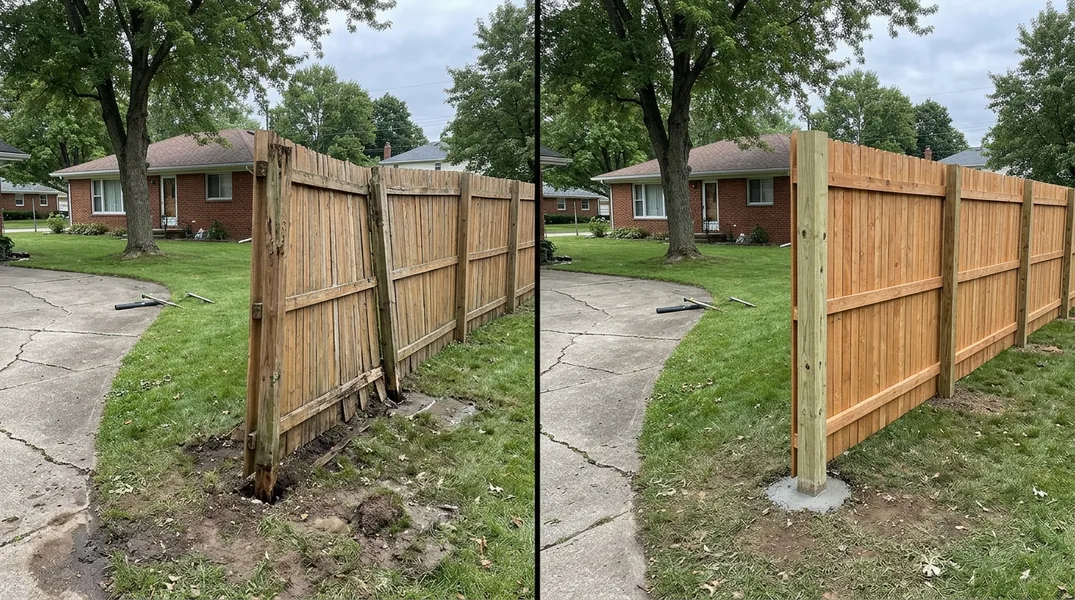
Understanding Frost Heave and Toledo's Unique Soil Challenges
If you've noticed your fence leaning or sagging, you're not alone. Homeowners throughout Toledo and the surrounding region face a common problem: fence posts that shift, tilt, and eventually fail. The culprit isn't always poor installation or cheap materials. Often, it's a combination of two natural forces that work against your fence year after year: frost heave and the region's notorious lake-plain clay soil.
Frost heave occurs when moisture in the soil freezes and expands during winter months. In Toledo, where temperatures regularly dip below freezing from November through March, this cycle repeats dozens of times each season. Each freeze-thaw cycle pushes fence posts upward slightly, and when the soil thaws, the post doesn't always settle back to its original position. Over several winters, this cumulative movement can shift a post several inches out of plumb, creating the characteristic lean that frustrates homeowners.
Lake-Plain Clay: Why Toledo Soil Works Against Your Fence
The Toledo region sits on ancient glacial deposits, leaving behind dense, heavy clay soil that holds moisture like a sponge. This isn't the well-draining sandy loam found in other parts of Ohio. Lake-plain clay expands when wet and contracts when dry, creating constant pressure on buried fence posts. During spring thaw and heavy rain, this clay becomes saturated, increasing the frost heave effect. The combination of clay's poor drainage and the region's freeze-thaw cycles creates a perfect storm for fence movement.
When posts are set directly into this clay without proper drainage considerations, water accumulates around the base. This trapped moisture accelerates rot in wood posts and creates the ideal conditions for frost heave to push posts upward. Even properly installed Wood & Privacy Fence Installation can suffer from these soil conditions if the installer doesn't account for local geology. This is why choosing a fence company that understands Toledo's specific challenges matters so much.
Rotted Fence Posts: When Soil Moisture Becomes a Structural Problem
Beyond frost heave, the moisture-retaining nature of lake-plain clay creates another serious issue: wood rot. When water pools around the base of a fence post, it seeps into the wood grain, especially at the soil line where wood is most vulnerable. Over time, this constant moisture exposure causes the post to decay from the inside out. A post might look solid from above ground while the buried portion crumbles away, weakening the entire fence structure.
Rotted fence posts don't just cause leaning fences; they can lead to complete failure. A section of fence can collapse without warning, leaving a gap in your privacy or security. If you notice soft spots in your posts, discoloration, or a spongy feel when you press on the wood, you likely have rot. This is where professional inspection and repair become essential. Toledo Fence specialists can assess whether posts can be reinforced or need complete replacement.
Leaning Fence Repair: Diagnosis and Solutions Near Me
Not every leaning fence requires complete replacement. The right repair strategy depends on what's causing the lean and how far the damage has progressed. If frost heave is the primary issue and the post wood is still sound, a fence professional might reset the post deeper, improve drainage around the base, or use concrete reinforcement to prevent future movement. However, if rot has compromised the structural integrity, the post must be replaced.
When you call Toledo Fence for a leaning fence evaluation, the team will examine post condition, soil drainage, and the extent of movement. For minor leans caused by frost heave alone, resetting and properly backfilling the post with gravel for drainage can solve the problem. For rotted posts or severe leans, replacement is the most reliable fix. The good news is that modern post-setting techniques and materials are far superior to older methods, meaning your repaired or replaced fence can withstand Toledo's challenging conditions for decades. If you're dealing with a leaning fence, contact Toledo Fence for a free estimate at (419) 724-2813.
Frost Heave Fence Posts: Prevention Strategies That Work
The best approach to frost heave is prevention. When Toledo Fence installs new fences, especially Wood & Privacy Fence Installation, proper post setting is critical. Posts should be set deep enough to resist heave, typically 30 to 36 inches for residential fences. However, depth alone isn't enough in clay soil. Drainage is equally important. Posts should be set in a gravel-filled hole that allows water to flow away from the wood rather than pooling against it.
Some installers use concrete footings, which can actually trap moisture against the post if not done correctly. The best practice involves setting the post in gravel first, then using concrete only above ground level. This allows water to drain away while providing structural support. Additionally, slope the ground away from the fence line to encourage water runoff. These preventive measures cost more upfront but save thousands in repairs down the road. Homeowners in Sylvania and surrounding communities have learned that investing in proper installation prevents costly leaning fence repairs later.
When to Replace vs. Repair: Understanding Your Options and Costs
Deciding whether to repair or replace a leaning fence depends on several factors: the age of the fence, the extent of rot, the number of affected posts, and your long-term plans for the property. A fence that's only five years old with one or two problematic posts might be worth repairing. A fence that's 15 years old with widespread rot and multiple leaning sections may be more cost-effective to replace entirely. Toledo Fence can help you evaluate these options and understand the financial implications.
Repair costs for individual posts typically range from a few hundred to over a thousand dollars per post, depending on accessibility and whether rot has spread to the rails and boards. Full fence replacement, while a larger upfront investment, often provides better long-term value and can include modern materials and improved installation techniques that resist frost heave better. When you're ready to explore your options, request a free estimate from Toledo Fence to get specific pricing for your situation. The team can walk you through repair versus replacement scenarios and help you make the best decision for your home and budget.
Looking for a professional fence contractor in Toledo? Toledo Fence responds fast for all your fence needs.
Get a Free Quote